Episodes

  • Reclaiming What It Means To Be Human with Workforce Futurist Stuart Evans
    Jun 10 2026

    In this episode, we sit down with workplace futurist Stuart Evans to explore AI, robotics, the future of work and what it all means for young people.

    From agentic AI and humanoid robots to university debt, entry-level jobs, adaptability and the future of human skills, this is a conversation about what happens when work changes faster than our old systems can keep up.

    Stuart challenges the idea that young people should simply follow the same paths as previous generations and argues that the most valuable future skills may not be technical at all - but deeply human.

    Key takeaways

    * Work is shifting from a place you go to something you do.

    * AI assistants are only the start; agentic AI is the real shift.

    * Repeatable tasks will increasingly move away from humans.

    * Young people may be inheriting outdated career advice.

    * Degrees won’t always be the best route to meaningful work.

    * Adaptability may be the most important future skill.

    * Humans tolerate human failure more easily than tech failure.

    * Generation Alpha may redefine what work and success mean.

    * The future may need fewer traditional jobs, but more human value.

    * The big question is how humans and technology work together.

    Keywords

    AI, future of work, agentic AI, workplace futurist, Stuart Evans, human skills, adaptability, Generation Alpha, robotics, humanoid robots, young people, careers, education, university, employability, automation, leadership, emotional intelligence, strategic thinking, technology, work culture, Wit + Grit.

    Chapters List

    00:00 The Future of Work: A New Landscape

    03:07 AI and Its Impact on Employment

    05:42 Humanoid Robotics: The Next Frontier

    08:21 The Changing Perception of AI

    10:52 Education and the Skills Gap

    13:21 The Role of Adaptability in the Future

    16:01 Redefining Success for Future Generations

    18:24 The Shift in Work Dynamics

    20:50 Community and Career Identity

    23:38 The Future of Work: A Choice, Not a Necessity

    29:30 Understanding Generation Alpha: Digital Natives and Their World

    32:48 Education in the Age of AI: Preparing for the Future

    35:21 Navigating Career Paths: Embracing Adaptability

    37:35 The Ethics of AI: Data Centers and Autonomous Weapons

    39:40 Neuralink and the Future of Human Enhancement

    41:01 The Metaverse: Reality vs. Virtual Experience

    43:11 The Future of Work: A Blended Human-Digital Workforce

    Show More Show Less
    47 mins
  • The Work Experience Problem: The Future Needs a First Chance
    Jun 2 2026

    In this episode, PJ and Andy reflect on Jess Dunn’s week of work experience with Wit + Grit, what it revealed about young people, confidence, opportunity and the future of work.

    From students struggling to secure placements, to AI anxiety, skills shortages, third sector pressure and the need for businesses to “press go”, this is a conversation about moving beyond roundtables and into action.

    Let's do this.

    Key takeaways

    * Young people are more anxious about the future than many adults realise.

    * Work experience expectations are often far too low.

    * Businesses can make a huge impact by simply opening the door.

    * AI is creating both opportunity and fear for the next generation.

    * Human skills like critical thinking will matter more than ever.

    * The third sector is already doing vital work but often lacks resource.

    * We need better infrastructure connecting young people, schools, charities and businesses.

    Keywords

    Wit + Grit, work experience, young people, future of work, AI, Microsoft Work Trends, Birmingham, skills shortage, employability, third sector, social mobility, opportunity, critical thinking, youth employment, business leadership, placements.

    Chapters

    00:00 The Journey of Mentorship and Youth Empowerment

    02:15 Challenges in Youth Employment and Future Anxiety

    05:20 The Role of AI in Shaping Future Careers

    06:35 Creating Opportunities Through Collaboration

    08:48 The Importance of Human Skills in the AI Era

    11:57 Navigating the New Normal in a Changing World

    21:41 The Power of Reading and Inspiration

    22:24 Daily Habits and Small Efforts

    24:17 Creating Opportunities for the Next Generation

    25:52 Addressing the Skills Shortage Debate

    30:03 Engaging the Community for Change

    31:18 Personal Reflections and Future Aspirations

    36:30 outro1.mp3

    Show More Show Less
    37 mins
  • Jessica Dunn: Give Young People a Chance
    May 20 2026

    At 17, Jessica Dunn was trying to find work experience in media, marketing, journalism and radio. After around 10 rejections, she was almost left spending the week in the school canteen.

    In this episode, Jess shares how young people are really feeling about work, careers, AI, grades, rejection and opportunity.

    It’s an honest conversation about confidence, the gap between generations, and why businesses need to do more to open doors for the next generation.

    Key takeaways

    * Young people are anxious about future careers.

    * Rejection damages confidence earlier than we realise.

    * Many students need opportunity before they have experience.

    * Businesses can help through tasters, open days and placements.

    * AI is both exciting and unsettling for young people.

    * Grades matter, but they should not define someone’s future.

    * Investing in young people benefits everyone.

    Keywords

    Jessica Dunn, work experience, young people, next generation, careers, employability, AI, education, confidence, Birmingham, Wit + Grit, opportunity, youth voice, placements, business responsibility, future of work, social mobility.

    Chapters

    00:00 Introduction to Work Experience

    00:55 Young People's Perspectives on Careers

    02:18 Challenges Faced by Young People in the Job Market

    04:25 The Role of Schools and Businesses

    06:25 Future Aspirations and Advice for Peers

    08:44 The Impact of Social Media on Young People

    10:31 Parental Influence and Support

    12:11 Conclusion and Reflections on Opportunities

    13:47 Navigating Parental Relationships and Social Media

    14:36 The Overwhelming Nature of Current Events

    15:19 The Impact of AI on Education and Careers

    17:57 Balancing AI Use and Critical Thinking in Youth

    24:09 The Job Market and AI's Role in Youth Employment

    27:21 Parenting in the Age of AI and Education

    31:38 The Importance of Grades vs. Personal Growth

    Show More Show Less
    36 mins
  • Ameesha Green: Everybody Should Name Their Teddies After Philosophers
    May 11 2026

    Ameesha Green is the founder of The Book Shelf, a book shepherd, philosophy thinker, mentor and proudly neurodivergent entrepreneur.

    In this episode, we explore ADHD, business, creativity, AI, education, philosophy, children’s futures, writing, and why one-size-fits-all thinking simply does not work. From naming her childhood teddies after philosophers to building a publishing business, Ameesha shares a refreshingly honest view on how different minds work, why books still matter, and whether AI is helping us think better — or helping us avoid thinking altogether.

    Key takeaways

    * ADHD can be both a creative advantage and a practical challenge.

    * Self-awareness matters more than forcing yourself into broken systems.

    * One-size-fits-all education does not serve every child.

    * AI can be a sparring partner, not a replacement for thinking.

    * Books still have the power to pass wisdom between generations.

    * Entrepreneurship is rarely linear — sometimes you build by saying yes.

    * Writing can help turn ideas into impact.

    Keywords

    Ameesha Green, ADHD, neurodivergence, AI, creativity, philosophy, books, publishing, entrepreneurship, The Book Shelf, book shepherd, education, children’s future, critical thinking, Stoicism, business ownership, self-awareness, Wit + Grit.

    Chapters

    00:00 Navigating Neurodivergence in Business

    02:46 The Role of Stoicism in Entrepreneurship

    05:03 Philosophy and Its Impact on Decision Making

    07:35 The Importance of Open Conversations with Kids

    10:33 Political Engagement and Community Involvement

    13:18 The Power of Books to Change Lives

    16:17 The Journey of Writing and Publishing Children's Books

    25:33 A Meandering Journey to Business

    28:56 Transitioning to Hybrid Publishing

    30:49 Learning from Authors and Their Stories

    33:03 Navigating Challenges as a Business Owner

    36:03 The Importance of Side Hustles

    38:10 Crafting Your Elevator Pitch

    39:31 The Role of AI in Publishing

    42:00 The Benefits of Writing

    45:05 Reflections on Personal Growth

    46:21 Wit and Grit in Business

    Show More Show Less
    49 mins
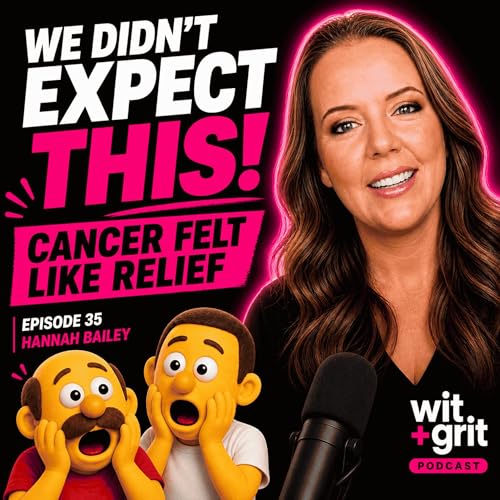
  • Hannah Bailey: The Cost of Always Saying “I’m Fine”
    May 5 2026

    Former police officer Hannah Bailey spent years working in high-pressure frontline roles, telling everyone she was fine while quietly carrying trauma, stress and undiagnosed PTSD.

    In this powerful episode, Hannah shares how a cancer diagnosis brought unexpected relief because it meant she no longer had to go back to work, why real resilience is not the same as silence, and how she rebuilt her life through treatment, therapy, humour and a completely new understanding of wellbeing.

    This is a conversation about trauma, workplace culture, cancer, PTSD, leadership, laughter, and what it really means to be well long term.

    Key takeaways

    * Looking “fine” on paper can hide deep emotional and mental exhaustion.

    * High-pressure cultures can train people to stay silent until they break.

    * Real resilience is not invincibility; it is knowing when to ask for help.

    * Leaders need to notice changes in people, not just performance.

    * Humour and connection can help the brain feel safe again.

    * Wellbeing support must be proactive, genuine and led from the top.

    Keywords

    Mental health, PTSD, trauma, policing, cancer survivor, resilience, workplace wellbeing, burnout, leadership, psychological safety, therapy, BWRT, Blue Light Wellbeing, stress, high-pressure work, police officer, emotional health, workplace culture.

    Chapters List

    00:00 Introduction to the Podcast Journey

    00:20 The Relief of a Cancer Diagnosis

    01:52 The Impact of Workplace Culture on Mental Health

    04:21 The Struggles of a Police Officer

    06:33 The Identity Crisis of a Police Officer

    09:22 The Journey Through Cancer Treatment

    11:47 The Role of Support Systems

    14:06 Finding Hope in Alternative Treatments

    16:51 The Power of Mindset and Resilience

    19:00 The Importance of Long-term Wellbeing

    24:39 Healing Through BWRT: A Personal Journey

    29:14 Understanding Trauma: The Role of the Amygdala and Hippocampus

    34:10 The State of Mental Health in Organisations

    36:19 Recognising Symptoms of Mental Health Issues

    42:12 Addressing Concerns: How to Approach Colleagues

    45:23 Wit and Grit: The Power of Humour and Resilience

    Show More Show Less
    51 mins
  • Potential and Power Skills with Kristie Brookes & Olivia Roden
    Apr 28 2026

    The graduate job market has never been more competitive, with up to 150 applicants per role, but that doesn’t mean opportunity has disappeared.

    In this episode, we sit down with Kristie Brookes and Liv Roden from Aston University to unpack what it’s really like to be a student right now, and what employers might be getting wrong.

    We explore the growing gap between education and employment, why “entry-level” roles now expect experience, and how students can stand out in a world of AI-generated CVs and identical applications.

    From “power skills” and emotional intelligence to hiring for potential over perfection, this is a practical, honest conversation about the future of work - and how both students and employers need to adapt.

    If you’ve got kids heading into the world of work, or you’re hiring the next generation, this one matters.

    Key Takeaways

    The graduate market is tougher than ever — but opportunity still exists

    Differentiation is everything (and it’s not just about grades)

    Employers should hire for potential, not just experience

    AI is changing entry-level work, but human skills matter more than ever

    “Power skills” (leadership, AI, innovation, emotional intelligence) are the real advantage

    Students aren’t lazy - they’re navigating a completely different world

    Your personality, passion, and story are what set you apart

    Themes

    • Future of work

    • Early careers / graduate market

    • AI & employability

    • Emotional intelligence

    • Identity & confidence

    • Social mobility

    • Hiring & leadership

    Keywords

    graduate jobs, early careers, Aston University, employability, Gen Z workforce, hiring graduates, AI in recruitment, power skills, soft skills, student careers, internships UK, graduate market UK, career advice, emotional intelligence at work, leadership skills, entry level jobs UK

    Chapters

    00:00 Meet the Employer Engagement Officers

    01:40 Current Student Experience and Market Challenges

    05:44 Understanding the Role of Employer Engagement Officers

    08:56 Career Journeys of Kristie and Olivia

    13:48 Aston University: Opportunities and Offerings

    16:45 Power Skills and Student Preparedness

    20:02 Perceptions of Young People in the Workforce

    21:50 Emotional Intelligence in the Job Market

    24:57 Demonstrating Passion and Personality

    28:55 The Value of University Experience

    33:10 Overcoming Self-Doubt in Career Paths

    Show More Show Less
    36 mins
  • Lewis Matthews: Happiness Is a Choice (Even in Atlantic Storms)
    Apr 20 2026

    Lewis Matthews has pushed himself to extremes - from international water polo to Ironmans, ultramarathons and rowing the Atlantic for 38 days.

    But this conversation isn’t just about endurance.

    It’s about what happens when life pushes back.

    Lewis opens up about losing his brother and his mom, how grief reshaped his perspective, and why success now looks very different. From “purposeful discomfort” to fatherhood, identity and resilience, this is a raw, honest conversation about what really matters, and how we carry life when it gets heavy.

    Key Takeaways

    • Happiness is a choice - even when life isn’t easy

    • Have a “why” - it gets you through the hardest moments

    • Purposeful discomfort builds resilience

    • Endurance teaches control - focus on what you can influence

    • Grief doesn’t go away - but it changes

    • Empathy often comes from pain

    • Have a “thing” - something that grounds you outside work and life stress

    • Success changes - especially when you become a parent

    • You don’t need to be the best - just keep learning and growing

    • Remember tomorrow - most things pass

    Keywords

    Lewis Matthews, rowing the Atlantic, endurance mindset, resilience, grief, loss, fatherhood, mental strength, stoicism, ultramarathon, Ironman, water polo, personal growth, emotional resilience, mindset, discipline, adversity, purpose, mental health, perspective, Wit and Grit podcast

    Chapters

    00:00 Introduction and Lewis Matthews' Background

    00:55 20 Days into the Atlantic Row: Challenges and Mindset

    02:09 Dealing with Storms and Ocean Conditions

    03:49 Big Storms and Boat Spinning Crisis

    06:01 Building Mental Fortitude and Stoic Principles

    08:28 Lewis' Origin Story and Water Polo Journey

    09:50 Transition from Water Polo to Endurance Sports

    11:52 Lessons from Ultras and Ironmans

    14:07 Why Endurance Challenges? The Mindset Behind the Why

    20:26 Personal Losses and Grief: The Impact of Family Tragedy

    24:56 Grief vs Physical Endurance: Comparing Challenges

    30:40 Lessons from Grief and Moving Forward

    32:37 Jiu Jitsu and Community as a Source of Resilience

    36:36 Redefining Success and Priorities

    38:09 Consciously Unlearning and Embracing New Identities

    42:21 Rowing Record and Scenario Planning

    44:38 Future Goals and Three-Year Vision

    45:37 Wit and Grit: The Balance of Intelligence and Grit

    47:14 Who Was Lewis Matthews? What Broke and What He Became

    Show More Show Less
    50 mins
  • Every Kid Is a Natural Red Teamer: Marcus Dimbleby on Critical Thinking and Leadership
    Apr 13 2026

    In Episode 32 of Wit + Grit, we are joined by Marcus Dimbleby - former Royal Air Force aerospace battle manager turned leadership and critical thinking specialist.

    From the military to major corporate transformation, Marcus shares what he’s learned about leadership, human behaviour and why so many organisations are still getting it wrong.

    This is a wide-ranging conversation covering disengaged workforces, the dangers of promoting people without training them, why young talent is leaving organisations so quickly, and how leaders can unlock the capability already sitting inside their teams.

    Marcus also breaks down critical thinking, red teaming, adaptive leadership, shadow boards, and why AI is only useful when paired with human judgement.

    There’s loads here for leaders, parents and anyone thinking about how we prepare the next generation for a world that’s moving fast.

    Key takeaways

    • Most leaders are promoted without being trained to lead.

    • Only 21% of the workforce is engaged.

    • Leaders don’t need to do it all themselves.

    • Slow down to speed up.

    • Critical thinking is not automatic — it has to be deliberately applied.

    • Every kid is a natural red teamer until the system squeezes it out of them.

    • Diversity of thought is the diversity that unlocks performance.

    • Young talent leaves when you recruit them for fresh thinking but don’t let them use it.

    • A group of high performers is not automatically a team.

    • Shadow boards are one of the smartest ways to bridge generations.

    • AI is a tool, not the answer.

    • The real future is AI plus collective intelligence.

    • What got you here won’t keep you here.

    Keywords

    Marcus Dimbleby, leadership, critical thinking, red teaming, adaptive leadership, workforce engagement, Gen Z, parenting, AI, collective intelligence, shadow boards, team dynamics, military leadership, Royal Air Force, aerospace battle manager, business transformation, disengaged employees, innovation, future of work, human skills, opportunity, Wit and Grit podcast

    Chapters List

    00:00 Introduction to Marcus Dimbleby

    02:45 Leadership Challenges in the Modern Workplace

    05:16 The Importance of Critical Thinking

    08:21 Red Teaming and Its Applications

    11:33 The Role of Parents in Fostering Critical Thinking

    14:24 The Disconnect Between Leadership and Talent

    17:14 Navigating Change in Organizations

    20:18 The Need for Adaptive Leadership

    23:09 Understanding the Real Problems in Organizations

    31:59 Unveiling Leadership Challenges

    34:20 The Importance of Tailored Solutions

    36:31 The Role of Shadow Boards in Leadership

    37:21 Navigating Military Insights and Youth Engagement

    46:07 The Impact of AI on Leadership

    53:44 Advice for the Next Generation

    01:01:50 outro1.mp3

    Show More Show Less
    1 hr and 2 mins