Episodes

  • Just Believe
    May 19 2026

    In a world where people are often judged by how much money they have, how much power they control, or how much attention they can gain, “Just Believe” by Trey Knowles stands as a powerful spiritual message that challenges the values of modern society. This song is not simply music—it is wisdom spoken through rhythm, faith spoken through testimony, and truth spoken through experience. Trey Knowles delivers a deeply reflective message about trusting God, seeking wisdom, living righteously, and understanding that true success does not come from wealth or pride, but from faith, humility, and obedience to the Lord.

    From the opening lines, the song immediately places spiritual understanding above earthly riches. “It's better to have wisdom than money” becomes more than just a lyric—it becomes the foundation of the entire message. In a culture obsessed with material gain, Trey reminds listeners that wisdom is priceless. Money can disappear, status can fade, and worldly possessions can lose their value, but wisdom from God remains eternal. The song teaches that insight, righteousness, patience, and self-control are greater treasures than temporary success gained through injustice or selfish ambition.

    Throughout “Just Believe,” Trey Knowles draws heavily from biblical principles, especially the wisdom found in the Book of Proverbs. The lyrics echo timeless truths about trusting in the Lord, avoiding pride, embracing instruction, and understanding that God directs the path of humanity. The song speaks directly to the human condition—the confusion, the uncertainty, and the struggle people face while trying to find direction in life. Trey openly admits that man cannot fully plan his own way and that “the proper answer comes from the Lord.” This honesty gives the song emotional depth and spiritual authenticity. It acknowledges human weakness while pointing listeners toward divine guidance.

    Show More Show Less
    3 mins
  • A Reflection on Faith and Hypocrisy
    May 18 2026
    Faith Is Measured by Compassion, Justice, and Action

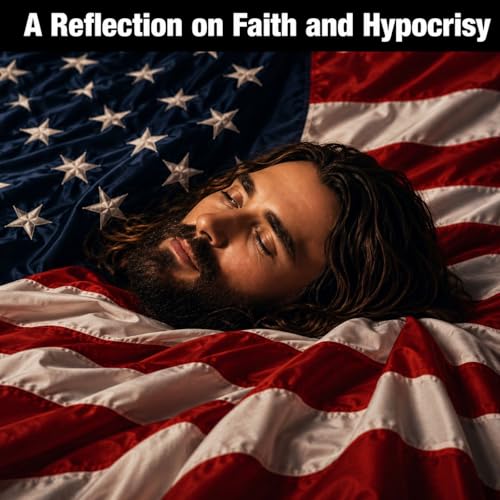
    A Reflection on Faith and Hypocrisy is a sharp spiritual critique of the gap between professed faith and real compassion. Trey Knowles challenges listeners to examine whether public claims of Christianity are being matched by actions rooted in mercy, justice, and care for the vulnerable.

    A judge has ordered the Trump administration to fully fund SNAP benefits to ensure that American citizens are fed. Yet the administration continues to appeal to the Supreme Court in an effort to keep these vital payments frozen.

    What kind of Christian actions are these?

    Knowles urges people to reflect deeply on that question. Those who claim to follow Christ but stand behind policies that harm the hungry reveal a troubling contradiction. They profess Jesus with their lips, yet their actions seem far removed from the spirit of God. Their faith appears hollow—words without the substance of compassion or justice.

    The Warning Against Hypocrisy

    The Qur'an also speaks about this kind of hypocrisy. In Surah Al-Baqarah 2:19, it describes:

    “Or [it is] like a rainstorm from the sky, within which is darkness, thunder, and lightning. They put their fingers in their ears against the thunderclaps in dread of death. But Allah is encompassing of the disbelievers.”

    This parable illustrates the condition of hypocrites—those who live in fear and confusion, unable to embrace divine truth. The storm symbolizes the turmoil within their souls. The darkness reflects their doubt and moral blindness. The thunder represents their fear when confronted with truth. The lightning is that brief flash of understanding they cannot hold onto.

    Their fingers in their ears signify denial—a refusal to truly hear or follow divine guidance. Ultimately, Allah's encompassing presence reminds us that no hypocrisy is hidden. He knows what lies in every heart.

    This verse follows others describing those who find light but lose it again—people who move forward only when faith feels easy and retreat when challenged. It serves as a timeless reminder: true belief is measured not by words, but by deeds rooted in compassion, humility, and justice.

    Core Themes

    • Faith vs. Policy: Knowles highlights how leaders who publicly identify as Christian can still support policies that harm vulnerable communities.
    • Hypocrisy in Practice: The central argument is that professing Jesus with words while denying compassion in deeds reveals a hollow faith.
    • Interfaith Resonance: By drawing on Surah Al-Baqarah's imagery of storms and darkness, Knowles shows that the warning against false faith reaches across religious traditions.
    • Compassion and Justice: The song calls listeners back to mercy, humility, and action that reflects true spiritual conviction.
    Show More Show Less
    3 mins
  • Brand New Day
    May 13 2026
    Trey Knowles — Brand New Day

    Trey Knowles' Brand New Day is a spiritually uplifting musical piece inspired by Ephesians 6:10–17. The song delivers a message of transformation, declaring freedom from the enemy system and separation from destructive ways of living. Brand New Day represents a personal awakening — a declaration that:

    “I am no longer like you; I have changed.”

    The song speaks about escaping cultural captivity and learned behaviors created by corrupt systems and false foundations. It reflects on being born into a world that appears right in the eyes of man, yet ultimately leads toward destruction. Through sin, deception, and conditioned behavior, humanity became trapped within a system designed to keep individuals spiritually blind and disconnected from truth.

    No longer bound, no longer captured, and no longer trapped in the web of deception, Brand New Day calls for a return to our original spiritual identity. The message expresses that humanity drifted away from its divine purpose when truth was replaced with falsehood and worldly corruption.

    Yesterday represented bondage, blindness, and corruption.

    Today represents awakening, renewal, and salvation from within through turning away from the system of the beast and returning to the ways of God.

    At its core, Brand New Day is a call to repentance, enlightenment, and spiritual warfare. The song reminds listeners that the greatest battle begins within the mind and soul. Every individual must choose to reject ungodliness, overcome destructive influences, and renew their thinking through faith and truth.

    Inspired by the Armor of God, the message encourages strength, discipline, and devotion in resisting the principalities and spiritual forces that seek to keep humanity in darkness.

    The Meaning Behind Brand New Day

    Brand New Day is a spiritually charged declaration of awakening, centered on the shift from bondage to freedom. Inspired by Ephesians 6:10–17, the song describes the moment a person recognizes they are no longer shaped by the enemy's system or the destructive patterns they once inherited.

    The breakdown reveals how humanity is born into cultural captivity — a world built on deception, false foundations, sin, and conditioned behaviors that keep people spiritually blind and disconnected from truth.

    The song marks the turning point where the individual separates from corruption, escapes the web of deception, and begins reclaiming their original spiritual identity.

    Brand New Day becomes more than music — it becomes a message of repentance, spiritual enlightenment, inner warfare, and renewal through faith.

    The song calls listeners to:

    • Reject ungodliness
    • Break destructive cycles
    • Renew the mind
    • Resist spiritual darkness
    • Return to truth and the ways of God

    Through the imagery of the Armor of God, Trey Knowles presents a message of endurance, discipline, and spiritual awakening for those seeking freedom from mental, cultural, and spiritual captivity.

    Show More Show Less
    4 mins
  • I See You Dragon
    May 10 2026

    “I See You Dragon” by Trey Knowles is a powerful and thought-provoking work that explores themes of deception, colonization, spiritual warfare, and awakening. In this piece, Trey Knowles portrays the “dragon” as a symbolic representation of destructive forces and systems that seek to steal, kill, and destroy — drawing from biblical imagery associated with Satan and rebellion against God.

    Knowles challenges readers to examine the spiritual roots of colonization and oppression, questioning whether the same spirit that sought to rise against God in heaven also works through systems that attempt to dominate, erase, and conquer God's people on earth, especially indigenous people created in the image of God.

    Through historical reflection, spiritual symbolism, and social commentary, “I See You Dragon” encourages readers to awaken to hidden truths, recognize manipulation and harmful ideologies, and pursue spiritual growth, resilience, and transformation.

    The work also addresses society's fascination with violence and weaponry as examples of destructive influences that pull humanity away from truth, identity, and divine purpose.

    Trey Knowles uses this message as a call for awareness, empowerment, and spiritual discernment in the face of systems rooted in deception and destruction.

    “I See You Dragon” is a declaration of awareness—an unveiling of the hidden forces that shape minds, nations, and identities.

    The “dragon” represents deception in all its forms: ideological manipulation, cultural conditioning, spiritual blindness, and the systems that quietly guide people toward destruction while convincing them they are free.

    The song speaks from the perspective of someone who has awakened, someone who now sees the machinery behind the illusion. It exposes how societies are influenced by narratives designed to control, distract, and divide, and how these forces operate like a predator circling above, feeding on confusion and ignorance. Yet the tone is not one of fear but of confrontation.

    By saying “I see you,” the speaker strips the dragon of its power—naming the deception, breaking the spell, and reclaiming clarity. The song ultimately becomes a call to consciousness, urging listeners to rise above the lies, reclaim their identity, and stand firm against the spiritual and ideological forces that seek to consume them.

    Show More Show Less
    4 mins
  • Defeat
    May 6 2026

    Trey Knowles' “Defeat” is a bold and thought-provoking spoken-word piece that confronts the enduring effects of colonialism, systemic oppression, and spiritual corruption while delivering a message of resistance, awakening, and hope.


    Central to the work is the symbolism of Sol Invictus, which Trey Knowles presents as representing Satan—the spirit that imagines itself unconquerable. In ancient Rome, Sol Invictus, meaning “Unconquered Sun,” became a symbol of imperial authority, self-exaltation, and the belief that earthly power could stand above all opposition. Knowles uses this imagery to expose what he sees as the arrogance of empires and systems that elevate themselves against God while claiming divine authority.


    According to Trey Knowles' message, the spirit of “Invictus” did not disappear with ancient Rome. Instead, it continues through ideologies rooted in domination, pride, materialism, and control. He points to symbols that still exist in modern culture—from radiant sun crowns seen in Roman imperial imagery and Vatican influence to brands and cultural references associated with the idea of being “unconquerable.” In Knowles' framework, these symbols reflect humanity's ongoing desire to glorify self-power rather than divine truth.


    The crown of Sol Invictus becomes more than a historical emblem in Defeat. It symbolizes the mindset of human invincibility: the belief that governments, empires, and corrupt systems can rule eternally without judgment. Trey Knowles contrasts this worldview with spiritual humility and obedience to God, arguing that every system built on pride and oppression will eventually fall.


    Through passionate repetition and prophetic language, Knowles challenges listeners to recognize the damage caused by colonial systems that have shaped economies, cultures, identities, and communities across the world.


    The spoken-word piece addresses economic instability, racism, discrimination, cultural destruction, and the loss of human rights caused by colonization and forced assimilation. It also condemns modern cycles of destruction—drug abuse, violence, exploitation, and spiritual confusion—that continue to enslave people mentally, socially, and spiritually.


    At the center of the performance is the repeated declaration:

    “We are more than conquerors. We can defeat Invictus.”


    This refrain becomes both a cry of liberation and a declaration of spiritual empowerment. In Trey Knowles' vision, “Invictus” represents oppression, corruption, pride, and every system that separates humanity from truth, righteousness, and God.


    The piece is deeply rooted in biblical and prophetic themes. References such as “Come out of her, my people” and “Alpha and Omega” call listeners toward repentance, spiritual awakening, and separation from corrupt systems. Knowles presents victory not as something achieved through political or worldly power, but through faith, truth, endurance, and alignment with God.


    Rather than ending in despair, Defeat closes with triumph and hope. Trey Knowles reminds his audience that despite generations of suffering, oppression, and spiritual deception, people can overcome through unity, truth, and the Spirit. The spoken-word performance ultimately stands as both a protest against injustice and a declaration that no empire, ideology, or corrupt power is truly unconquerable. According to Knowles' message, every “Invictus” spirit will fall before divine truth.

    Show More Show Less
    3 mins
  • 47th
    May 5 2026

    Trey Knowles' allegory song "47th" is the son of the bloodline of the Holy Roman Emperor of Germany, who becomes the president of the United States. The Third Reich, which the Nazis referred to as the Thousand-Year Reich of earth control. 47th is the Tyrant who puts the world in chaos, pretends to bring peace, but causes humanity to kill one another.

    Show More Show Less
    4 mins
  • Rahab to Son of Red Earth
    Apr 30 2026

    Trey Knowles' “Rahab to Son of Red Earth”

    Trey Knowles' Rahab to Son of Red Earth is a prophetic message-song in which a modern-day Rahab confronts the Son of Red Earth with a warning that his walls are about to fall and that his sins have risen to the heavens. Through her voice, the song delivers a sharp declaration of divine justice, exposing the hidden corruption, pride, and spiritual negligence that have accumulated over time. Rahab stands as a marginalized witness who sees what the powerful overlook, while the Son of Red Earth represents Adam's descendants who have forgotten their covenant identity and built false structures of security.

    Biblical imagery—such as the fall of Jericho and the arrogance of Goliath—frames the conflict as a spiritual battle in which Yahweh humbles the mighty and brings truth to light. The song ultimately becomes a reckoning and a wake-up call, reminding listeners that Yahweh sends warnings before judgment and urging them to confront the systems, sins, and strongholds that can no longer be ignored.

    Overall, the song presents a modern-day Rahab delivering a message to the Son of Red Earth, warning that his walls will soon fall and that his sins have reached the heavens. The lyrics emphasize themes of divine justice, historical reckoning, and spiritual warfare, drawing on biblical figures such as Goliath and rich symbolic imagery.

    Show More Show Less
    3 mins
  • Trey Knowles - Crowned in Purple
    Mar 20 2026

    Trey Knowles' “Crowned in Purple” is a powerful allegorical record that blends spiritual reflection with poetic storytelling. The song explores the rise of influence through systems, tradition, and authority—revealing how power can shape belief, identity, and devotion without the use of force. Through vivid imagery of “purple and gold,” the track paints a picture of a world drawn into a structured imitation of truth, where people unknowingly exchange genuine connection for control.

    With a haunting tone and cinematic progression, the song challenges listeners to discern between what appears sacred and what is truly rooted in truth. It's more than just a song—it's a mirror, asking a deeper question: are we following truth… or becoming the image we were taught to worship?

    Show More Show Less
    6 mins