Episodes

  • Answering Questions about Tolkien's Third Age
    May 1 2026

    What really happened during the Third Age of Middle-earth—the age of fading kingdoms, rising shadows, lost heirs, and the One Ring’s long road back into history? In this episode, Craig and Gaurav dive into the Third Age of Tolkien’s Legendarium, exploring the major events that shaped the world leading up to The Hobbit and The Lord of the Rings. From the aftermath of Isildur’s victory and the loss of the One Ring, to the decline of Arnor, the strength of Gondor, and the slow return of Sauron, this discussion connects the deep history behind Tolkien’s most famous stories. We look at how kingdoms rose and fell, why Gondor’s golden age mattered, how Rohan was founded, and why the choices of figures like Isildur still echo thousands of years later. The episode also touches on characters, legends, and adaptations connected to the wider mythology, including Talion and the legacy of shadow in Middle-earth. Whether you’re a longtime Tolkien fan or just beginning your journey beyond the films, this episode offers an accessible guide to one of the most important periods in Middle-earth history. Join us as we unpack the politics, wars, bloodlines, betrayals, and ancient powers that define the Third Age. If you enjoy deep dives into Tolkien lore, Middle-earth history, The Lord of the Rings, The Hobbit, and fantasy worldbuilding, make sure to like, subscribe, and let us know what topic we should explore next.

    Don't forget I have a Youtube Membership: https://www.youtube.com/channel/UCbp8JMZizR4zak9wpM3Fvrw/join or my Patreon: https://www.patreon.com/pacificwarchannel where you can get exclusive content like "What if Japan invaded the USSR during WW2?"

    Show More Show Less
    1 hr and 14 mins
  • The Siege of Alesia: How Julius Caesar Crushed the Gauls
    Apr 24 2026

    How did Julius Caesar defeat a larger Gallic force and secure one of the most famous victories in Roman history? In this episode, we explore the Siege of Alesia, one of the defining clashes of the Gallic Wars and one of the greatest examples of Roman siege warfare in the ancient world. If you’re interested in Julius Caesar, ancient Rome, Roman history, military history, and ancient warfare, this is a battle you need to know. Craig and Gaurav break down the full story of the Battle of Alesia, from the wider Roman conquest of Gaul to the rise of Vercingetorix, the Gallic leader who united tribes against Caesar. They examine how Caesar’s political ambitions were tied to military success, why the campaign in Gaul mattered so much to his future, and how his leadership style helped shape one of the most important victories in classical history. The episode looks closely at Caesar’s military tactics, including troop morale, battlefield decision-making, logistics, and the construction of extraordinary fortifications around Alesia. Facing overwhelming numbers, Caesar relied on discipline, engineering, and tactical flexibility to hold off both the defenders inside the stronghold and the massive relief force outside. The result was a masterclass in Roman military tactics and a dramatic turning point in the fall of Gaul. You’ll also hear about earlier struggles in the campaign, the resistance Rome faced from Gallic and Germanic tribes, the role of key commanders, and the brutal aftermath of Caesar’s victory. The Siege of Alesia explained in full, this episode shows why many historians consider it a peak moment of ancient history and one of the clearest demonstrations of how the Roman Empire expanded through force, strategy, and relentless determination. If you enjoy history podcasts, ancient history explained, and deep dives into famous commanders and decisive battles, this episode is for you.

    Don't forget I have a Youtube Membership: https://www.youtube.com/channel/UCbp8JMZizR4zak9wpM3Fvrw/join or my Patreon: https://www.patreon.com/pacificwarchannel where you can get exclusive content like "What if Japan invaded the USSR during WW2?"

    Show More Show Less
    1 hr and 34 mins
  • The Taiping Rebellion
    Apr 17 2026

    What if a single belief system could spark one of the deadliest civil wars in world history? In this episode, we dive into the Taiping Rebellion (1850–1864)—a catastrophic uprising that reshaped Qing China and left millions dead. The Taiping Rebellion (1851–1864) was the deadliest civil war in human history, fueled by religious vision, political ambition, and massive social upheaval in Qing-dynasty China. It began when Hong Xiuquan, a failed exam candidate, claimed divine revelations and formed a movement that blended biblical ideas with Chinese traditions. Over time, that faith-inspired message became a revolutionary program that rejected Qing rule and promised a radically new society. Several forces helped drive the uprising. Widespread poverty, corruption, and instability left many communities vulnerable, while the effects of the opium trade accelerated economic decline and social breakdown. As Taiping armies grew, they used both military pressure and strict ideological commitment—turning conquest into a cultural and political project. A major turning point came in 1853, when the Taiping captured Nanjing and made it their capital, establishing the Heavenly Kingdom of Taiping. The rebellion then spread across large parts of southern China through campaigns, sieges, and battles—often accompanied by harsh internal crackdowns and leadership rivalries that weakened the movement. Ultimately, Qing forces rebuilt their strength through more effective regional commanders and modernizing tactics. The rebellion was crushed after years of grinding warfare, culminating in the fall of Taiping power in the mid-1860s. Estimates of deaths commonly reach 20–30 million, making the Taiping Rebellion a defining tragedy of 19th-century China—and a key topic for anyone studying revolutionary ideology, imperial decline, and the human cost of civil conflict.

    Show More Show Less
    8 hrs and 52 mins
  • The Seven Years' War
    Apr 10 2026

    This war didn’t just reshape Europe—it remade the entire world. In this Echoes of War Podcast we discuss the entire Seven Years' War The Seven Years’ War (1756–1763) was one of the most important conflicts of the 18th century, reshaping empires across Europe, North America, Africa, and Asia. Often called the first truly “global” war, it pitted major powers against one another in a struggle over trade routes, colonial territory, and political influence. The war’s roots lay in long-running rivalry between Britain and France, alongside shifting alliances in Europe. In 1756, the conflict effectively exploded when Britain and Prussia faced off against France, Austria, and their partners—dramatically widening the scale of the fighting. In Europe, the conflict centered on Prussia and Austria, especially after Frederick the Great defended Prussia against overwhelming odds. Decisive victories at Rossbach (1757) and Leuthen (1757) helped secure Prussian survival and military reputation. In North America, the war is closely linked to the French and Indian War, where Britain fought to wrest control of French-held territories. Major campaigns included battles around the St. Lawrence and the eventual British success that culminated in the capture of Quebec in 1759. Meanwhile, fighting in India and elsewhere further confirmed the global stakes, as European companies and local allies dragged imperial competition into regional power struggles. By the end, exhaustion and mounting losses pushed the belligerents toward negotiations. The Treaty of Paris (1763) fundamentally changed the colonial balance: Britain gained Canada, while France ceded key territories, and Prussia kept Silesia, preserving its status as a major European power. With massive consequences for empires—and the conditions that would later fuel other revolutions—the Seven Years’ War remains essential history for understanding modern global politics.

    Show More Show Less
    6 hrs and 37 mins
  • The End of the Taiping Rebellion
    Apr 3 2026

    The Dramatic end to the deadliest civil war in history, the Taiping Rebellion! In this Taiping Rebellion finale, we trace how one of the deadliest uprisings of the 19th century reached its breaking point as the Qing dynasty tightened its grip and the Taiping state began to collapse from within. After years of fierce fighting, the Taiping leadership faced a perfect storm in the final chapter. Disease swept through key strongholds, including a devastating cholera outbreak in Shanghai, while military pressure intensified around Nanjing—the rebellion’s political and symbolic center. As resources ran short and control weakened, Taiping forces struggled to hold territory, protect civilians, and maintain command unity. The siege conditions, combined with collapsing supply lines and mounting casualties, turned desperate resistance into a shrinking circle of survival. This episode explains the turning points that sealed the Taiping Rebellion’s fate: the fall of major positions, the breakdown of battlefield effectiveness, and the brutal aftermath that followed the end of organized Taiping resistance. You’ll see why the rebellion’s final months matter—not only for what happened on the ground, but for what it meant for the future of imperial China. If you’re learning about Hong Xiuquan’s movement, the rise of the Taiping state, and how the uprising ended in 1864–1865, this history documentary brings the finale into clear, chronological focus. Don't forget I have a Youtube Membership: https://www.youtube.com/channel/UCbp8JMZizR4zak9wpM3Fvrw/join or my Patreon: https://www.patreon.com/pacificwarchannel where you can get exclusive content like "What if Japan invaded the USSR during WW2?"

    Show More Show Less
    1 hr and 37 mins
  • An Emperor's Fall, Empress's Rise and Taiping's Last Stand
    Mar 27 2026

    With the Emperor dead, the Empress Dowager in charge, how will this effect the Taiping Rebellion? In this captivating podcast episode, hosts Craig and Gaurav explore the dramatic turning points in the Taiping Rebellion, one of history's deadliest civil wars (1850-1864), which ravaged China and claimed 20-30 million lives. They focus on the death of the Taiping leader, the self-proclaimed Heavenly King Hong Xiuquan—referred to here as Emperor Xianfeng—and its profound impact on the rebellion's momentum and the Qing dynasty's fragile stability. Xianfeng's demise in 1864, amid illness and the fall of Nanjing, created a power vacuum that accelerated the Taiping's collapse, with his young son briefly succeeding him before the movement's total defeat. The discussion delves into the rise of Empress Dowager Cixi a key Qing figure who seized control in 1861 through a palace coup, steering the dynasty toward reforms while suppressing rebellions. Craig and GauravHong Xiuquan analyze the military strategies employed by both sides: the Taiping's fanatical, religiously driven guerrilla tactics and mass mobilizations versus the Qing's reliance on modernized armies, foreign mercenaries like the Ever-Victorious Army led by Charles Gordon, and superior artillery. They highlight the evolving dynamics between Taiping and Qing forces, marked by brutal sieges, betrayals, and shifting alliances. Foreign relations play a central role, with Western powers like Britain and France intervening via the Opium Wars, providing aid to the Qing through treaties and arms, ultimately tipping the scales against the Taiping. The episode underscores the rebellion's themes of religious zeal, social upheaval, and anti-Manchu nationalism, offering insights into how it weakened the Qing and paved the way for modern China's emergence.

    Don't forget I have a Youtube Membership: https://www.youtube.com/channel/UCbp8JMZizR4zak9wpM3Fvrw/join or my Patreon: https://www.patreon.com/pacificwarchannel where you can get exclusive content like "What if Japan invaded the USSR during WW2?"

    Show More Show Less
    1 hr and 40 mins
  • Taiping Rebellion: Frederick Ward's Eastern Campaign Chaos
    Mar 20 2026

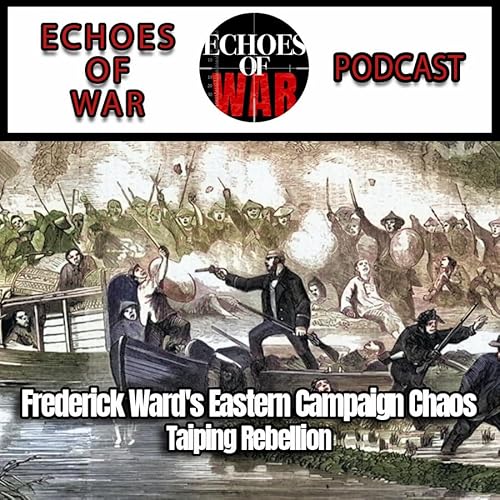
    Craig and Gaurav dive into the Taiping Rebellion’s Eastern Campaign, where the war’s brutality collides with foreign opportunism and panic in the treaty-port world. As Taiping forces threaten key cities and supply lines, Shanghai becomes a focal point: a booming international enclave surrounded by instability, rumor, and competing interests. Western residents and Qing-aligned officials fear the collapse of trade and security, but their options are limited—regular imperial forces are unreliable, local militias are chaotic, and command structures are fractured. Into this volatile situation steps Frederick Townsend Ward, an American adventurer often described as a filibuster or mercenary organizer. Ward helps assemble and lead foreign-drilled troops meant to bolster local defenses and push back Taiping advances. The episode emphasizes that this wasn’t a clean “West vs. Taiping” story; it was a messy scramble of self-interest, improvisation, and shifting alliances, with money, prestige, and survival shaping decisions as much as ideology. The hosts recount disastrous assaults on Taiping-held positions—attacks driven by urgency and overconfidence, executed with poor intelligence and coordination. These failures reveal how hard it was to fight the Taiping on their ground and how quickly modern weapons and “professional” leadership could still be squandered by confusion and hubris. Ultimately, the discussion highlights the conflict’s complexity: foreign involvement deepened local power struggles, intensified the violence around Shanghai, and left civilians caught between armies, experiments in private warfare, and a rebellion reshaping China. Don't forget I have a Youtube Membership: https://www.youtube.com/channel/UCbp8JMZizR4zak9wpM3Fvrw/join or my Patreon: https://www.patreon.com/pacificwarchannel where you can get exclusive content like "What if Japan invaded the USSR during WW2?"

    Show More Show Less
    1 hr and 37 mins
  • The End of the Seven Years’ War: How Peter III Turned the Tide for Prussia
    Mar 13 2026

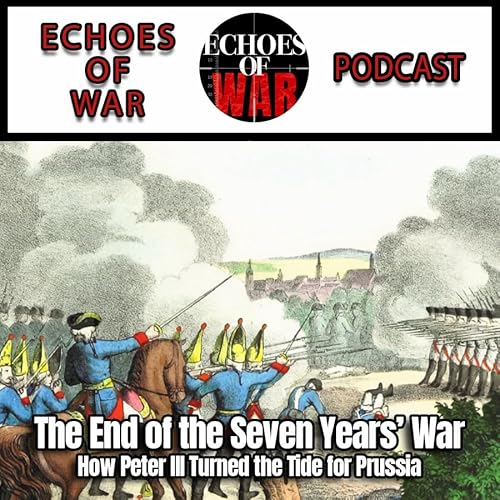
    What if a losing streak rewrote European power forever? The Seven Years’ War didn’t end with a single decisive battle; it ended with a reshaped continent. This video dives into the final acts: Frederick the Great’s brutal setbacks in the mid-war years, the seismic shift sparked by Peter III’s accession in Russia, and how Prussia’s stubborn resilience and shifting alliances carried the war to a historically transformative conclusion. We’ll trace key campaigns in Saxony and across the European theaters, examine how Russia’s stance flipped fortunes, and explore the dramatic diplomatic aftermath that sealed new borders and futures. You’ll see how Britain’s naval supremacy and Russia’s continental power redefined who dictated terms on the map, and how the Paris and Hubertusburg treaties reset balance of power for decades to come. Juxtaposed with portraits, maps, and battlefield sketches, the narrative highlights leadership decisions, logistics, and the long shadow this conflict cast on European diplomacy, military doctrine, and national prestige. If you’re curious about how a global war seeded the rise of Prussia as a European heavyweight and set the stage for future coalitions, this deep-dive is for you. Like, subscribe, and turn on notifications for more history that connects the dots between past clashes and today’s geopolitics.

    Don't forget I have a Youtube Membership: https://www.youtube.com/channel/UCbp8JMZizR4zak9wpM3Fvrw/join or my Patreon: https://www.patreon.com/pacificwarchannel where you can get exclusive content like "What if Japan invaded the USSR during WW2?"

    Show More Show Less
    1 hr and 54 mins