Episodes

  • MAINE MADNESS! Why Fixing the Supreme Court Means Fixing Congress (with Michael Cohen and Sarah Isgur)
    Apr 30 2026

    Janet Mills’ Senate bid in Maine is effectively over — not that it really got off the ground in the first place. She was supposed to be the top-tier recruit, the popular governor-turned-candidate Chuck Schumer believed could finally take down Susan Collins in a state that otherwise leans blue. Instead, she spent the entire race trailing Graham Plattner who, on paper, should’ve been far easier to beat. It didn’t matter what opposition research came out about him or how aggressively it was pushed. None of it stuck, and Mills never found a way to change the trajectory.

    What stands out is how little impact the traditional playbook had. There was plenty of money, plenty of ads, and a clear attempt to define Plattner early. But the race didn’t move. If anything, it exposed a growing gap between campaign strategy and voter behavior. Mills relied heavily on air support, while Plattner was everywhere in person, constantly holding events and staying visible. That contrast ended up mattering more than anything that showed up in a negative ad.

    Politics Politics Politics is a reader-supported publication. To receive new posts and support my work, consider becoming a free or paid subscriber.

    There’s also a broader lesson here about what kind of campaigning is working right now. The candidates who seem to break through are the ones who are constantly engaging, constantly talking, and constantly generating new moments. It’s less about message discipline and more about presence. Plattner fits that mold, and Mills never really did. She couldn’t match that energy, and in a race like this, that gap becomes impossible to ignore.

    Now the dynamic shifts to the general election, where Susan Collins gets a matchup she likely prefers. She can run as the steady, familiar option against a more unpredictable opponent, which has been her formula for years. But there’s some risk in that calculation. Wanting a specific opponent doesn’t always work out the way you expect, and recent political history has a few high profile reminders of that.

    Still, the immediate takeaway is simple. A highly recruited, well funded candidate lost to someone who just outworked and out-connected her. For all the sophistication in modern campaigns, this ended up being a very basic result. One candidate showed up everywhere, and the other never quite got going.

    Chapters

    00:00:00 - Intro

    00:04:01 - Janet Mills

    00:08:17 - Michael Cohen on Maine, Texas, and More

    00:58:58 - Iran Options

    01:04:58 - DHS Shutdown

    01:06:31 - Casey Means

    01:08:54 - Sarah Isgur on Supreme Court Drama

    01:40:05 - Wrap-up


    This is a public episode. If you'd like to discuss this with other subscribers or get access to bonus episodes, visit www.politicspoliticspolitics.com/subscribe
    Show More Show Less
    1 hr and 46 mins
  • Florida Goes Hard on Redistricting! What the Correspondents' Dinner Was Really Like (with Kirk Bado)
    Apr 28 2026

    Florida’s new congressional map is out, and the more I look at it, the more it feels like Republicans are trying to push right up against the edge of what is politically and legally possible. The goal is obvious: take a delegation that used to split closer to 20 to 8 and force it into a 24 to 4 map. The way they get there is not subtle. It is classic packing and cracking, cramming Democrats into a handful of ultra blue districts while shaving just enough of that vote into surrounding areas to flip them red. On paper, it works. In practice, it might be a little too clever for its own good.

    The Orlando and Tampa changes are where the knife really goes in. Seats that were at least competitive or lightly Democratic get completely reengineered into solid Republican territory, often by double digit swings. That is not a tweak, that is a transformation. But the tradeoff is that you are stretching your margins thinner everywhere else. You are counting on your voters to show up consistently in districts that are no longer blowouts, and that is where the risk creeps in. If turnout slips even a little, some of these engineered wins start to look a lot shakier.

    South Florida is the most interesting piece, because it is where the assumptions behind the map really get tested. The strategy is to break up a dense cluster of Democratic voters and isolate them into just a few seats, while turning longtime strongholds into competitive races. Debbie Wasserman Schultz’s district is the clearest example, going from safely blue to something that could genuinely flip. But that only works if the political coalitions in South Florida behave the way Republicans think they will.

    And that is a big if. The theory is that Latino voters in South Florida, especially Cuban, Venezuelan, and Colombian communities, will continue trending Republican, especially given recent foreign policy developments that resonate directly with those groups. If that holds, then this map could deliver exactly what it is designed to do. But if there is even a modest snapback, or if Democratic enthusiasm spikes the way it sometimes does in midterms without Trump on the ballot, then those same districts could turn into real problems.

    Because the energy question cuts both ways. Republicans may like how the map looks, but Democrats in Florida are fired up in a way that is hard to ignore. These are high turnout voters, especially older ones, and they do not need much motivation to show up. When you combine that with districts that have been made more competitive by design, you end up with a map that is not just aggressive, but potentially volatile.

    On top of all of that is the legal question, which is not trivial. Florida technically has rules against partisan gerrymandering, and while the state can argue that this is just a neutral redraw, that argument is going to get tested. If the courts decide this crosses the line, then the entire map could get thrown into uncertainty at the worst possible time for Republicans.

    So I keep coming back to the same thought. This is a high risk, high reward play. If everything breaks right, Republicans net multiple seats and strengthen their position heading into the midterms. But if even a few assumptions go wrong, turnout, demographics, or the courts, then what looks like a masterstroke could end up being a self inflicted problem.

    Chapters

    00:00:00 - Intro

    00:02:16 - Florida’s Redistricted Map

    00:21:43 - Update

    00:22:51 - House Republicans

    00:26:05 - Texas Senate Race

    00:29:31 - Iran

    00:35:17 - Kirk Bado on His Correspondents’ Dinner Experience

    01:23:16 - Final Thoughts and Wrap-up


    This is a public episode. If you'd like to discuss this with other subscribers or get access to bonus episodes, visit www.politicspoliticspolitics.com/subscribe
    Show More Show Less
    1 hr and 32 mins
  • Another Assassination Attempt Ends the White House Correspondents' Dinner Early
    Apr 26 2026

    An assassination attempt at the White House Correspondents’ Dinner turned what is usually a choreographed, slightly self-congratulatory night into something much more serious, very quickly. I had been at the Washington Hilton earlier, and what stood out in retrospect was how ordinary the setup felt. Security was clearly tight around the ballroom itself, but the rest of the hotel operated like a normal venue, with people moving in and out of the lobby without much friction. That gap matters, because it helps explain how someone armed could even get close enough to force a response from Secret Service. He never reached the inner event, but the fact that he got as far as he did cuts through the illusion that these environments are fully locked down.

    It’s tough to dismiss this as a one-off. The rhetoric outside the event was already intense, with protesters framing politics in absolute, existential terms. When that becomes the baseline, it is not surprising that someone eventually acts on it. This is not the first attempt tied to Trump, and unfortunately, it wouldn’t surprise me if it weren’t the last. Even if the immediate danger was contained, the pattern itself is the more unsettling part, because it suggests a level of volatility that is not going away anytime soon.

    Politics Politics Politics is a reader-supported publication. To receive new posts and support my work, consider becoming a free or paid subscriber.

    I left before everything happened and walked over to the Substack party, which ended up being chaotic in a completely different way. Because of the lockdown around the Hilton, a lot of people never made it over, so the party had this strange half full energy. Plenty of space, plenty of chatter, but also the sense that something had already gone off script for the night. That mood did not last long, because it quickly turned into its own kind of spectacle when Michael Tracy confronted Julie K. Brown over claims about Epstein related reporting.

    What followed felt less like a serious dispute and more like a live action version of internet drama. Voices went up, Jim Acosta jumped in loudly, and suddenly a party conversation turned into a full scene with security stepping in. Tracy was eventually asked to leave, and that was that. Compared to what had just happened across town, it was trivial, but it also captured something real about the media world, where personal grudges and public arguments can spill over at any moment. Taken together, the night swung between genuinely dangerous and strangely ridiculous, which feels like a pretty accurate snapshot of the current political environment.

    Chapters00:00 - Intro

    01:23 - Trump Assassination Attempt

    06:29 - Substack Party


    This is a public episode. If you'd like to discuss this with other subscribers or get access to bonus episodes, visit www.politicspoliticspolitics.com/subscribe
    Show More Show Less
    21 mins
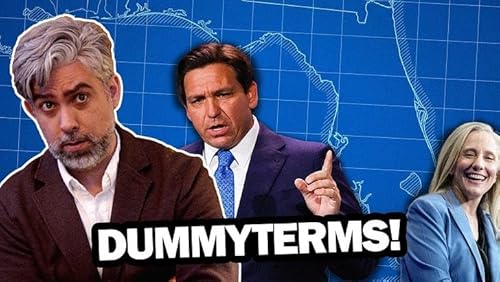
  • Is Florida the Last Redistricting Hope? Donald Trump's Presidential Permanence (with Gabe Fleisher)
    Apr 23 2026

    Republicans are running out of places to redraw the map, and Florida is quickly becoming their last real shot to claw back seats before the midterms. The pressure is now squarely on Ron DeSantis to deliver a map that could net a handful of gains, but even inside the party there is real disagreement about whether that is possible. The risk is not just that the effort fails, but that it backfires, turning carefully engineered districts into competitive ones if turnout does not break the right way.

    That is the core problem with aggressive redistricting at this stage. The more you try to maximize advantage by packing and slicing districts, the more you rely on your own voters showing up consistently. If they do not, those same districts can flip. That is why some Republicans are warning that what looks like a smart map on paper could end up being a “dummymander” in practice, especially in an environment where Democratic voters appear more motivated. In fact, this is starting to look risky, it might be more accurate to call this year’s elections “dummyterms,” a phrase I’m committed to making stick come hell or high water.

    Politics Politics Politics is a reader-supported publication. To receive new posts and support my work, consider becoming a free or paid subscriber.

    At the same time, the conflict with Iran is entering a more volatile phase. New mines in the Strait of Hormuz and an expanded U.S. naval response signal that this is no longer just posturing. It’s a pressure campaign with real global stakes, especially given how much of the world’s oil supply runs through that corridor. The situation is starting to look less like a slow escalation and more like a standoff that will force a decision sooner rather than later.

    What makes it even more unpredictable is the internal instability within Iran itself. Leadership shakeups, reports about the Supreme Leader’s health and — seriously — facial disfigurement, and a broader power struggle all suggest that there is no single, unified voice making decisions. That kind of vacuum makes negotiation harder and escalation easier, because different factions may be pulling in different directions at the same time.

    The timeline here is being driven by economics as much as politics. With exports constrained and storage capacity nearing its limit, Iran will eventually have to decide whether to halt production or find another way around the blockade. Neither option is easy, and both come with significant costs. That’s why this moment feels compressed, with pressure building toward some kind of near term resolution.

    Finally, a different kind of competition is playing out between the United States and China, this time over artificial intelligence. The Trump administration is accusing China-backed actors of effectively copying American AI systems by extracting outputs and using them to train rival models. It is a technical fight, but the implications are strategic, especially if it allows competitors to replicate advanced systems without the same investment or safeguards.

    That accusation fits into a broader pattern of technological rivalry, where innovation, security, and economic advantage are all intertwined. If these claims are accurate, it raises serious questions about how U.S. companies can protect their models and whether current safeguards are enough. With a high stakes meeting between Trump and Xi on the horizon, this issue is likely to become part of a much larger negotiation over trade, security, and global influence.

    Chapters

    00:00:00 - Intro

    00:02:16 - Gabe Fleisher on the White House Press Corps and the Supreme Court

    00:22:41 - Redistricting Fights

    00:27:31 - Iran

    00:33:14 - China and AI

    00:36:29 - Gabe Fleisher on the Permanence of the Trump Administration

    01:08:56 - Final Thoughts


    This is a public episode. If you'd like to discuss this with other subscribers or get access to bonus episodes, visit www.politicspoliticspolitics.com/subscribe
    Show More Show Less
    1 hr and 15 mins
  • Congress Cleans House! The Future of Tech, Politics, and AI (with Tom Merritt)
    Apr 21 2026

    Congress is in the middle of a rare moment where members are actually being forced out, and it is happening on both sides at once. Eric Swalwell and Tony Gonzales are already gone, both stepping down before they could be expelled, and now the pressure is shifting to others who are caught up in their own scandals. It is not subtle. This is a full blown house cleaning, and it is moving faster than Congress usually moves on anything involving its own members.

    The fallout from Swalwell is still spreading, especially for Ruben Gallego, who had been one of his most vocal defenders just days before everything collapsed. Now he is stuck trying to explain what he knew and how close he really was to someone whose behavior is suddenly under a microscope. His answer, calling Swalwell “flirty,” lands awkwardly and undercuts the whole “normal guy” image that made him politically effective in the first place. It sounds like a line that was workshopped instead of something real, and that is exactly the kind of thing that voters tend to pick apart.

    At the same time, Sheila Cherfilus-McCormick is staring down what looks like an inevitable expulsion vote over allegations that she funneled millions in COVID relief money into her campaign. The details are serious enough that even Democrats do not seem eager to defend her, and the lack of public support from party leadership says a lot. There might have been a time when members circled the wagons, but this feels different. The appetite to protect colleagues at all costs is not what it used to be.

    Politics Politics Politics is a reader-supported publication. To receive new posts and support my work, consider becoming a free or paid subscriber.

    All of this points to a broader shift in how Congress is handling its own scandals. When four different members, tied to both financial and personal misconduct, are all facing consequences at the same time, it suggests that the internal pressure has reached a point where inaction is no longer politically safe. Members are not being pushed out because Congress suddenly became more ethical. They are being pushed out because keeping them has become more dangerous.

    Meanwhile, the administration is dealing with its own turbulence as Labor Secretary Lori Chavez-DeRemer exits under the cloud of an inspector general investigation. The official explanation is that she is leaving for the private sector, but the timing and the surrounding allegations make it clear that this was not a clean departure. Reports of inappropriate relationships, questionable travel, and internal complaints created enough heat that the White House appears to have decided it was easier to move on than fight it out publicly.

    The pattern shows up again with FBI Director Kash Patel, who is now suing The Atlantic for defamation over a story that paints him as erratic and prone to heavy drinking. The lawsuit is massive in dollar amount, but legally it faces long odds, especially given the standard required for public figures. More than anything, it reads like an attempt to push back on a narrative that is already taking hold, one that questions both his professionalism and his control over the agency.

    Taken together, all of this feels like a moment where institutions are trying to clean themselves up in real time, but only because the pressure to do so has become unavoidable. Congress is ejecting members, the administration is cycling out officials, and public fights over reputation are playing out in the open. It is not orderly, and it is not coordinated, but it is very clearly a system reacting to its own instability.

    Chapters

    00:00:00 - Intro

    00:02:43 - Virginia Redistricting

    00:05:34 - Congress Cleans House

    00:16:23 - Update

    00:17:00 - Lori Chavez-DeRemer

    00:22:09 - Reconciliation

    00:25:36 - Kash Patel

    00:32:20 - Tom Merritt on Politics, Tech, and AI

    01:27:13 - Wrap-up


    This is a public episode. If you'd like to discuss this with other subscribers or get access to bonus episodes, visit www.politicspoliticspolitics.com/subscribe
    Show More Show Less
    1 hr and 37 mins
  • Trump vs. The Pope! The Scandal That Threatens Democratic Fundraising (with Kevin Ryan and Dave Levinthal)
    Apr 16 2026

    Israel and Lebanon have agreed to a ceasefire after talks in Washington, with President Donald Trump saying it would take effect at 5 p.m. Eastern time on Thursday. He said he spoke with Israeli Prime Minister Benjamin Netanyahu and Lebanese President Joseph Aoun, and plans to bring both to the White House for what he called a major step in relations between the two countries.

    The agreement is supposed to set up a longer-term framework for stability along the border and touch on broader security issues in the region. But it’s landing in a situation where fighting, pressure, and political signaling are all still active in the background.

    Trump also floated the idea that this could connect to a wider regional deal, including Lebanon’s relationship with Hezbollah, the Iran-backed group that plays a major role inside the country.

    That ties into the bigger question hanging over all of this: Iran. U.S.–Iran talks recently fell apart without a deal, though the White House is still leaving the door open to more negotiations. Nothing is settled there, but it sits underneath almost every other move in the region.

    Politics Politics Politics is a reader-supported publication. To receive new posts and support my work, consider becoming a free or paid subscriber.

    In Washington, there’s a pretty straightforward way this is being read. Hezbollah’s strength in Lebanon is tightly linked to Iranian support. If that support weakens, the balance in the region shifts. If it doesn’t, then agreements like this stay limited in what they can actually change.

    At the same time, Trump has been talking about possible Supreme Court vacancies and new nominees if openings come up, including around Justice Samuel Alito. Nothing has officially changed, but the speculation is already part of the political environment. Any vacancy would go through a Republican-controlled Senate and could lock in the court’s current 6–3 conservative split for years.

    In Congress, a vote to block the sale of military bulldozers to Israel failed, but 40 Democratic senators supported it anyway. Another vote on restricting bomb transfers also picked up support from Democrats. These votes don’t change policy on their own, but they show a clear split opening up inside the party over military aid to Israel.

    That split isn’t total, but it’s real. Democrats are still generally aligned on Israel, but fewer of them are treating support as automatic, especially as the conflict continues and public pressure builds.

    Chapters

    00:00:00 - Intro

    00:03:58 - RFK Jr.

    00:05:43 - Religion and Trump’s Pope Feud

    00:07:43 - Kevin Ryan on the Pope and Trump

    00:54:33 - Update

    00:54:49 - Israel-Lebanon

    00:58:25 - Supreme Court Appointments

    00:59:59 - Israel and Democrats

    01:02:31 - Dave Levinthal on ActBlue

    01:31:41 - Wrap-up


    This is a public episode. If you'd like to discuss this with other subscribers or get access to bonus episodes, visit www.politicspoliticspolitics.com/subscribe
    Show More Show Less
    1 hr and 42 mins
  • Eric Swalwell's Dramatic Fall from Grace (with Juliegrace Brufke)
    Apr 15 2026

    The fall of Eric Swalwell feels less about the details of any single allegation and more about how quickly everything around him collapsed once those allegations hit. The shift is immediate. He goes from being a serious political figure, running for governor and active in Congress, to someone who is suddenly on the defensive, apologizing for “mistakes in judgment” while also denying the most serious claims. That tension sits at the center of everything he says.

    What stands out to me is how he is trying to hold two positions at once. On one hand, he is saying the major allegations are completely false and that he will fight them. On the other hand, he is acknowledging past behavior that he regrets. That creates a gray area that is hard to interpret, because it leaves open the question of what exactly he is admitting to versus what he is rejecting outright. It feels like an attempt to limit the damage without fully conceding anything that could end his career immediately.

    I also notice how quickly the political consequences stack up. He suspends his campaign, faces pressure to resign, and loses support almost in real time. There is not much of a waiting period here. Once multiple accusations are out in the open, the system moves fast, especially within his own party. It reflects how little tolerance there is for uncertainty in situations like this, even before anything is formally proven.

    Politics Politics Politics is a reader-supported publication. To receive new posts and support my work, consider becoming a free or paid subscriber.

    At the same time, there is an effort from him to frame the timing as suspicious, pointing out that this is happening close to an election where he was in a strong position. That argument is clearly meant to introduce doubt, to suggest that there could be political motivations behind the accusations. Whether or not that lands, it shows that he understands the only real path forward is to challenge the credibility of what is being said about him.

    What I find most telling is that, regardless of what is true or not, the damage is already done politically. Even his own statement separates his personal fight from his campaign, which is basically an acknowledgment that the campaign cannot survive the situation. At that point, it becomes less about winning and more about managing fallout.

    By the end of all of this, I’m left thinking the process matters as much as the outcome. The allegations still have to be investigated, and nothing is settled legally, but in political terms, the consequences move much faster. Once that momentum starts, it is very hard to reverse.

    It’s a rapid unraveling. Not necessarily a final conclusion, but a point where everything changes direction at once, and there is no clear way back to where things were before. And as for who’s the next governor of California, well… We might be looking back towards Brat Summer for some inspiration.

    Chapters

    00:00:00 - Intro

    00:02:12: - Eric Swalwell Resigns

    00:19:53 - Update

    00:20:35 - Canada

    00:22:20 - Israel-Lebanon

    00:24:26 - Housing Market

    00:27:56 - Juliegrace Brufke on Eric Swalwelll and Congress

    00:54:33 - Wrap-up (and Dianna Russini thoughts...)


    This is a public episode. If you'd like to discuss this with other subscribers or get access to bonus episodes, visit www.politicspoliticspolitics.com/subscribe
    Show More Show Less
    1 hr and 5 mins
  • The Ceasefire That Isn't a Ceasefire and the Mistaken Assumptions of the IRGC (with Zineb Riboua)
    Apr 10 2026

    Just how absurd does the word ceasefire sounds when nobody actually stops firing? We’re calling it a ceasefire, we are acting like it is a ceasefire, but the reality on the ground does not match the label. Missiles are still being launched, ships are still being threatened, and the Strait of Hormuz is effectively shut down despite whatever was signed on paper.

    That disconnect makes me question what kind of agreement was actually reached in the first place. If Iran agreed to open the strait and then immediately went back to restricting access and intimidating shipping, then either they never intended to follow through or they cannot enforce their own decisions. Neither option is particularly reassuring. When your main leverage is control over a critical global shipping lane, giving that up even briefly would be a major concession, so the reversal almost feels inevitable.

    I keep coming back to how much of this hinges on internal dynamics within Iran. The delegation that is set to meet with the United States this weekend includes both more moderate figures and hardliners tied to the Revolutionary Guard. That alone tells me that whatever comes out of those talks is going to be complicated. If the people at the table are not the same people controlling the missiles, then any agreement is going to have gaps.

    Politics Politics Politics is a reader-supported publication. To receive new posts and support my work, consider becoming a free or paid subscriber.

    At the same time, the stakes are getting higher because the economic effects are no longer abstract. Oil prices are climbing again, shipping is disrupted, and you have thousands of people effectively stuck waiting for this situation to resolve. Iran’s ability to pressure the global economy through the Strait of Hormuz feels like its most important card, and right now they are playing it as aggressively as they can.

    Back in Washington, the dysfunction is not helping anything. The DHS funding situation is still unresolved, and the Republican plan to split funding into separate reconciliation bills sounds shaky at best. The idea that lawmakers would pass a smaller bill now with promises about a larger one later, especially after the midterms, feels like something that is much easier to propose than to actually execute. It comes across as a sign that leadership does not have a clean path forward.

    There is also a broader sense that neither party is really in control of the moment. Republicans are struggling to deliver on basic governing tasks even with power, while Democrats are throwing out ideas like invoking the 25th Amendment in ways that do not seem grounded in how the process actually works. It creates this environment where everyone is reacting, but nobody is clearly leading. Stretching into the middle of April, the war is still active, negotiations are uncertain, and political systems on both sides are showing strain. You have to wonder what all of this leads up to.

    Chapters

    00:00:00 - Intro

    00:02:03 - Congress

    00:07:22 - Iran

    00:10:37: Zineb Riboua on the Iran War and China

    00:30:16 - Update and Melania Trump

    00:33:11 - DHS Shutdown and TSA Funding

    00:35:32 - 25th Amendment

    00:38:20 - Interview with Zineb Riboua, con’t

    00:59:46 - Wrap-up


    This is a public episode. If you'd like to discuss this with other subscribers or get access to bonus episodes, visit www.politicspoliticspolitics.com/subscribe
    Show More Show Less
    1 hr and 3 mins